Founder, TimerHaven
"I have two kinds of problems, the urgent and the important. The urgent are not important, and the important are never urgent." Dwight D. Eisenhower
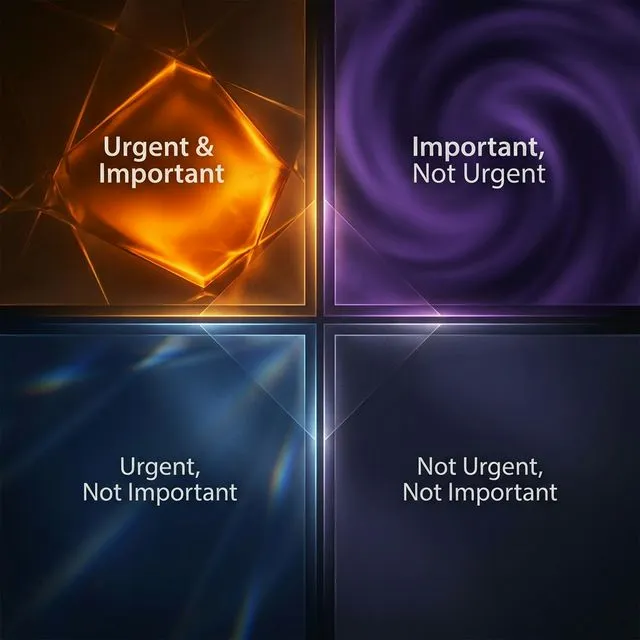
Dwight D. Eisenhower, the 34th President of the United States, was famously one of the most productive people to ever live. His method for managing the immense load of the presidency evolved into what we now call the Eisenhower Matrix (or the Urgent-Important Matrix).
The Four Quadrants of Prioritization
The matrix works by evaluating tasks against two criteria: Urgency and Importance. This creates four distinct categories that determine how you should act on any given task.
Crises, deadlines, pressing problems. These require immediate attention to avoid negative consequences.
Planning, relationship building, personal growth, Deep Work. This is where high-performers spend most of their time.
Most emails, some meetings, interruptions. Tasks that feel urgent but don't contribute to your long-term goals.
Time-wasters, excessive social media, busy-work. Activities that offer zero value and should be removed.
How to Master Quadrant 2
The secret to long-term success isn't managing Q1 better, it's spending more time in Quadrant 2. Because Q2 tasks aren't urgent, they are easy to postpone. However, the more time you spend on un-urgent, important work (like planning and prevention), the fewer Q1 crises you will face.
Practical Steps to Use the Matrix
- Brainstorm: List every task you have on your mind.
- Categorize: Assign each task to one of the four quadrants. Be honestis that meeting actually important, or just urgent?
- Prune: Delete everything in Q4 immediately.
- Buffer: Delegate or automate as much of Q3 as possible.
- Block: Schedule uninterrupted time blocks for your Q2 tasks.
Executing with TimerHaven Tools
The Eisenhower Matrix is a planning framework, but you still need execution tools to follow through. Here is how to combine the matrix with TimerHaven:
- For Q1 tasks: Use the Task Timer to work against a strict deadline and clear the crisis quickly.
- For Q2 Deep Work: Use the Pomodoro Timer to protect your focus during your most important strategic work.
- For Q2 Planning: Use the Calendar to time-block your week and ensure important tasks aren't crowded out by urgent ones.
Don't Just Plan?Perform.
Once you've prioritized your quadrants, use our tools to get the work done.
Explore All ToolsCommon Pitfalls
Most people spend their entire day in "Quadrant 3" masquerading as "Quadrant 1." They feel busy because notifications are popping and emails are coming in, but at the end of the day, their most important goals haven't moved forward.
To fix this, you must learn to say "No" to the urgent requests of others, and to say "Yes" to your own long-term priorities.